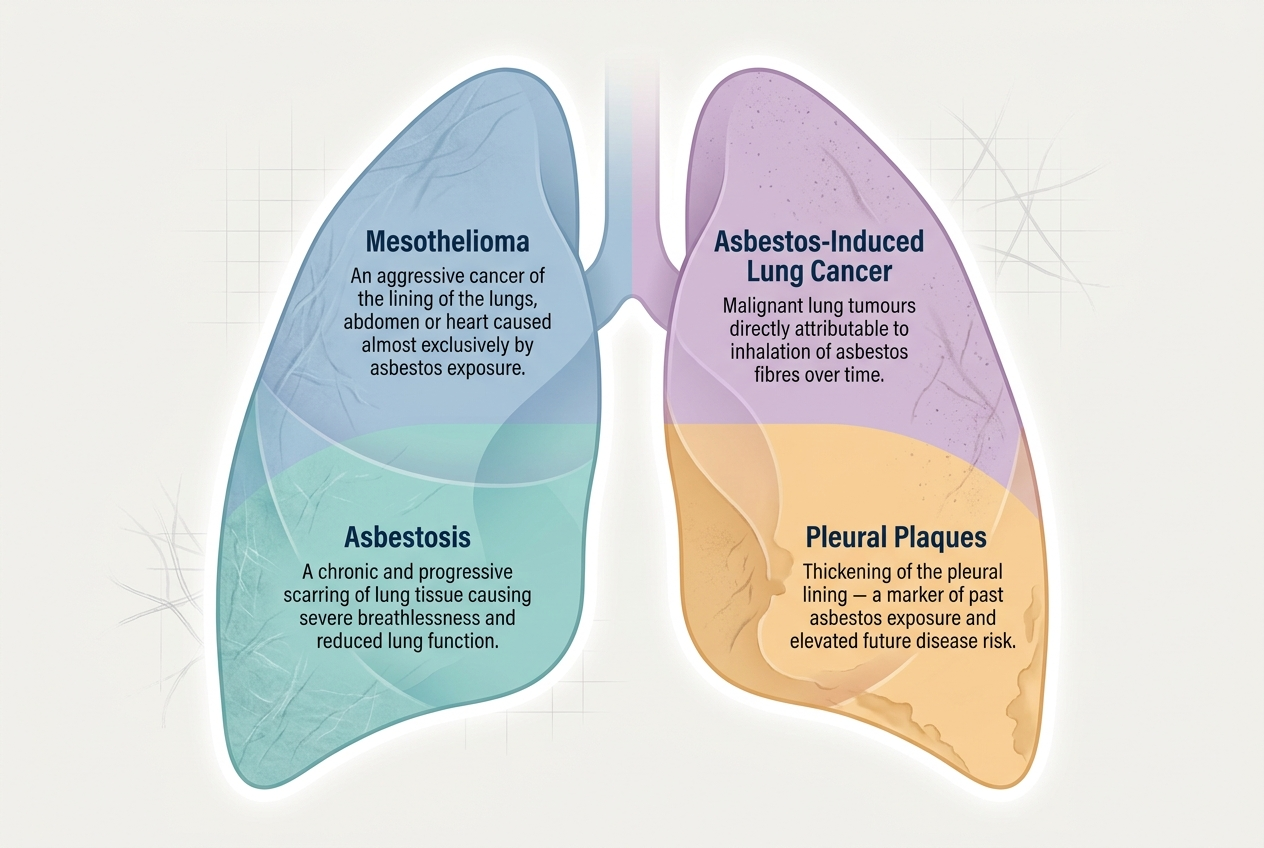
Why asbestos fibres are uniquely dangerous to human lungs.
Asbestos is a broad term for a naturally occurring mineral that was extensively manufactured into over 3,000+ products worldwide. Australia historically recorded one of the highest per-capita usage rates of asbestos-containing materials (ACM) globally.
Asbestos products can release microscopic fibres into the air which are unknowingly inhaled. Once inhaled, the human body is unable to break these fibres down or expel them — they accumulate in lung tissue over time, triggering inflammation, scarring and cellular changes.
There is no known safe level of asbestos exposure. Even brief or incidental contact with asbestos-containing materials can carry inherent health risk. Prolonged or significant exposure is directly linked to serious and often fatal Asbestos Related Diseases (ARDs) — all of which are progressive, debilitating and currently incurable.
Latency: 10 to 40+ years
Symptoms typically present 10–40+ years after exposure. By the time clinical signs appear, the disease is usually well-established — making asbestos a true silent killer.